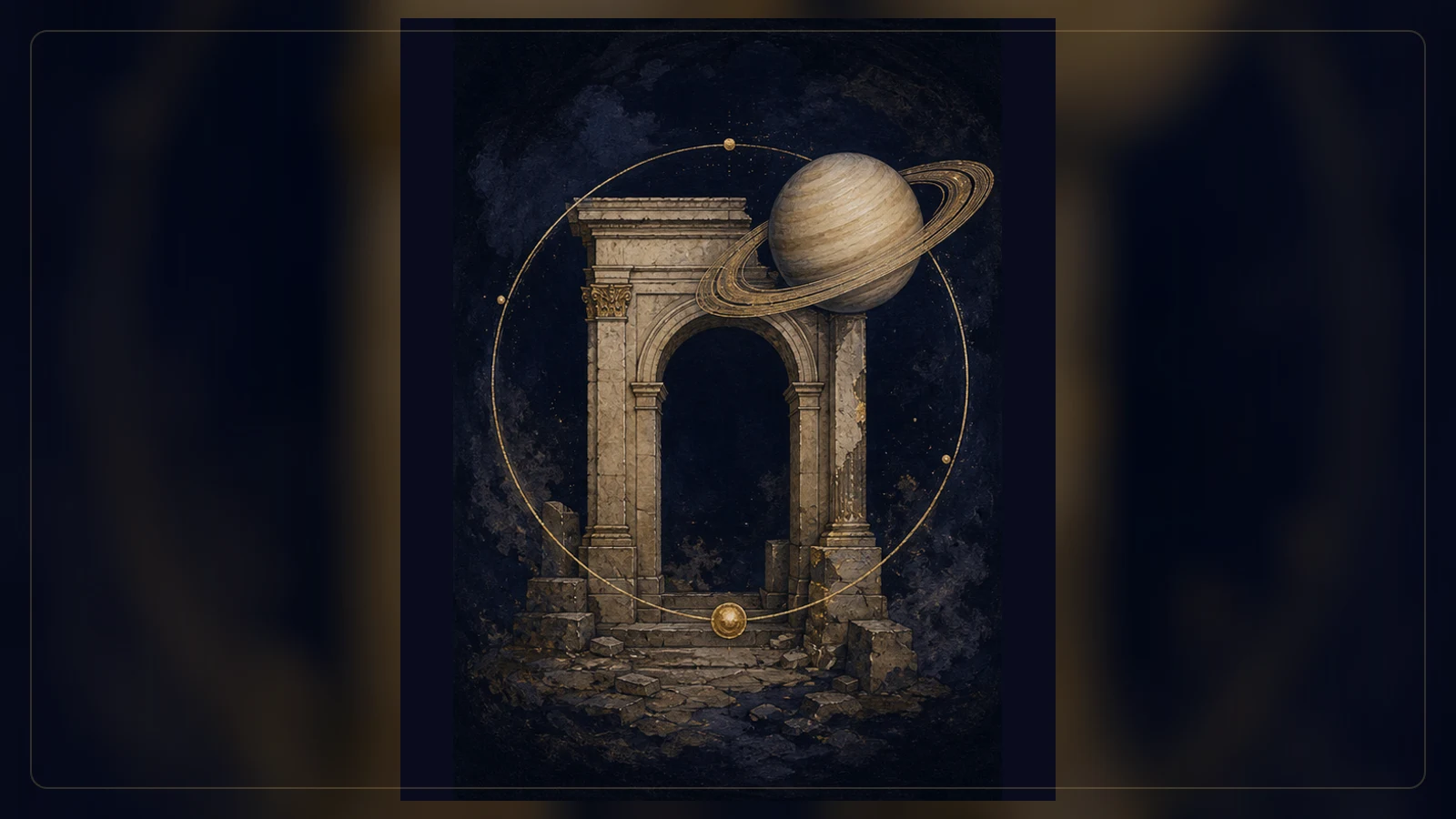
Somewhere between 27 and 31, a lot of lives get renovated at once: careers swapped, cities left, weddings, divorces, the quiet shelving of a decade-old plan. Astrology has a name for the season — the Saturn return — and for once the mechanism is not mystical at all. It is orbital.
Saturn needs about 29.5 years to circle the zodiac, so around 29 it comes back to the exact spot it occupied when you were born — and whatever you have built by then gets weighed. Not by the sky; by you, at the sky's prompting. The return is a deadline you did not set, on work that was always yours.
The astronomy first
Saturn is the slowest of the eight placements a chart tracks. It spends roughly two and a half years in each sign and takes about 29.5 years for a full lap, so the first return — transiting Saturn rejoining its natal position — lands between 27 and 31 for everyone, with the exact hit usually near 29. The second arrives around 57 to 60. There is no skipping it and no rushing it; it is not triggered by your choices, only timed by the orbit.
Because Saturn retrogrades, the return is rarely one clean pass. Often it crosses the natal degree three times over a year or more, which is why the season can feel less like a moment and more like a negotiation that keeps reopening.
This is also why the late twenties rhyme across so many lives. Your friends are not copying each other. They are all standing in the same part of the orbit.
Why it has the reputation
Most of what stands in a life at 28 was built fast and built early: a degree chosen by a teenager you have since outgrown, a career inherited from a parent's worry, a city picked by a job offer, a relationship continued because ending it never found a convenient month. None of that is shameful — everyone builds the first draft of a life from borrowed blueprints. The Saturn return is when the borrowed parts get audited.
Structures that are genuinely yours pass the audit and harden. Structures that were staging — kept up for an audience, a parent, an old version of you — suddenly cost more than they return. The return's reputation for wreckage comes from exactly this: what collapses in those years was usually load-tested and found to be scenery.
What it actually asks
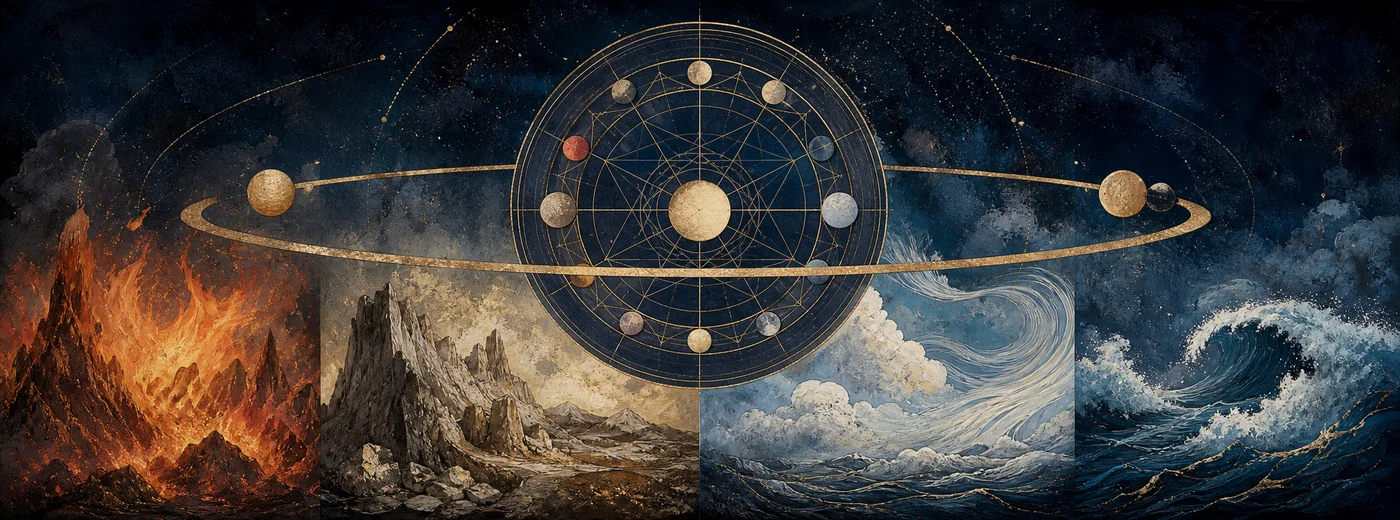
Strip the drama away and the return asks one question in three or four rooms of your life: do you own this, or are you just standing in it? Work — stay in the career because you choose it, or leave, or change the terms. Place — is this city yours, or just where the current dropped you? Partnerships — the return years are famous for both weddings and break-ups, and they are the same move wearing different clothes: the implicit being made explicit. Saturn is the planet of contracts. The return is contract review.
Renegotiation counts. Owning a commitment does not always mean keeping it, and it never means merely enduring it. It means being able to say, out loud, why it is still yours — and rewriting the terms where the old ones were signed by someone you no longer are.
Not punishment — compound interest
The honest version is financial, not punitive. Nothing arrives at your Saturn return that was not already on the account. Choices compound quietly for a decade — the postponed conversation, the career drifted into rather than chosen, the friendships run on autopilot — and around 29 the statement is issued. The interest is real, but it is interest on your own decisions, not a fine invented by the sky.
This is where the return gets misread. It is tempting, mid-audit, to blame the stars for what is simply a due invoice — to call it cosmic punishment when it is arithmetic. The sky only set the date. The items on the statement are yours, which is harsher in one way and far better in another: every line of it was within your control, and the next decade's statement still is.
And if your return was, or is, brutal — that is not proof you built badly. Audits are hard even on honest books. For some people the heaviest item is grief, or a family pattern that took 29 years just to see clearly. Saturn does not grade on difficulty.
The return does not send new bills. It prints the statement for an account you have been running for years.
Navigating one
No ritual required — the work is administrative, which is very Saturn. Three moves cover most of it:
- Name what is yours. List your standing commitments — job, city, relationship, debts, the version of you your family expects — and mark each one honestly: chosen, inherited, or drifted into. The marking is the work; most people have never done it on paper.
- Finish or release. Half-commitments are what the return charges most for: the almost-degree, the maybe-relationship, the business that is permanently about to start. Either sign properly or close the account. Both are respectable. Hovering is the only expensive option.
- Ask where Saturn sits in your chart. The return replays your natal Saturn, so its sign colours the lesson — an earth-sign Saturn tends to audit the material scaffolding, an air-sign Saturn your ideas and agreements, a water-sign Saturn the emotional debts. Knowing yours turns a vague dread into a specific assignment.
After it: authority that is earned
People who are through it tend to report the same thing in different words: the thirties feel more solid — not because life got easier, but because whatever is still standing was chosen on purpose. That is the return's actual product. Not wreckage; authorship. Authority in the original sense — being the author of your own structures — is what Saturn trades in, and after the first return it is earned rather than borrowed.
Keep the scale honest, too. The return is a season of one to three years, not a life sentence, and you are allowed ordinary happiness in the middle of it. None of this is fate: Saturn's orbit sets the meeting, it does not write the minutes. Two people hit the same transit and one renegotiates a career while the other finally leaves a city they never chose. The timing is shared. The content is yours.
See where Saturn sits in your chart — your full reading includes it, alongside the other seven placements.